Assessments
Run structured assessments for GDPR and the EU AI Act
Six stages connect assessment work to the systems, suppliers, documents, and records behind it — with better starting points and human-reviewed results.
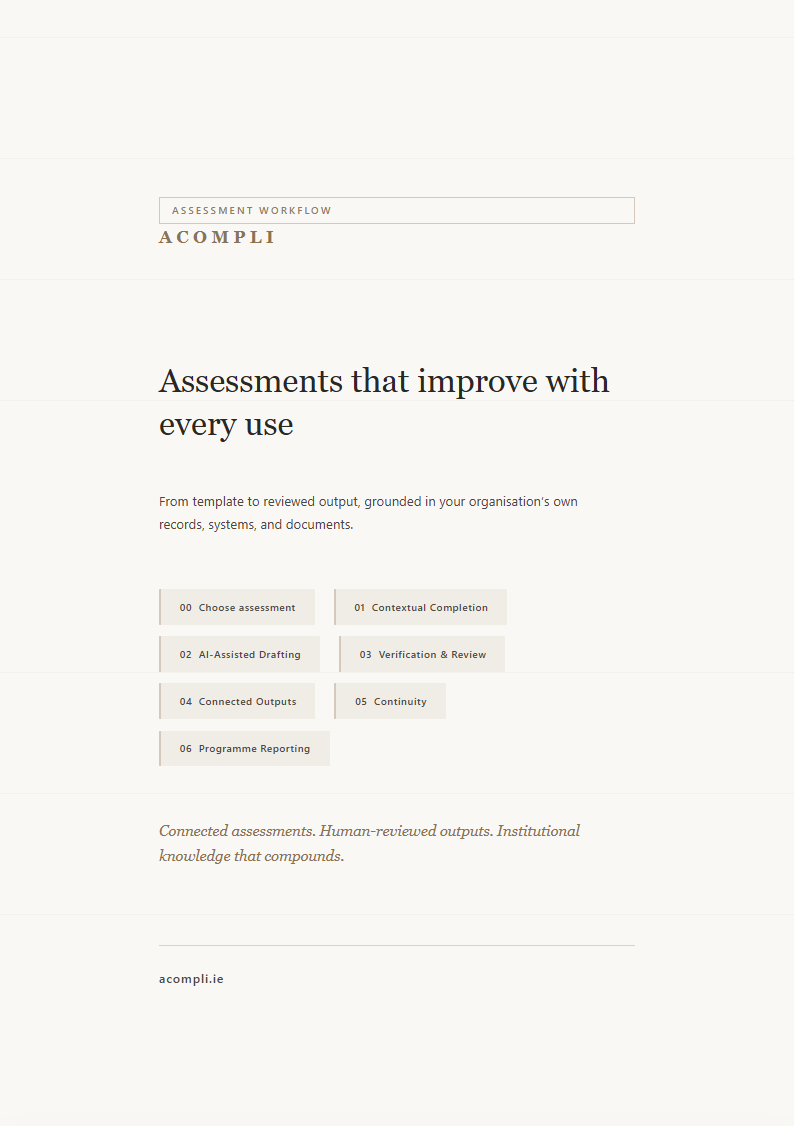
From template to reviewed output
Six stages connect assessment work to the systems, documents, and records behind it. Every assessment builds on the last.
Pre-built templates or build your own
Start with a structured template for DPIAs, LIAs, TIAs, processor assessments, employee data reviews, AI governance workflows, and related regulatory assessments — or use the AI template builder to generate a tailored assessment from scratch.
The AI template builder automatically tags every RoPA-affiliated question field as it generates your template. Article 30 fields — legal basis, data categories, recipients, retention periods — are mapped before a single answer is written.
DPIAs
Higher-risk processing and formal privacy risk review under GDPR Article 35.
Processor Assessments
Vendor oversight, due diligence, and contract governance reviews.
Transfer Impact Assessments
International transfers, supplementary measures, and transfer governance.
IT & Change Assessments
New systems, migrations, and technology implementations involving personal data.
EU AI Act Assessments
AI classification, governance, transparency, and human oversight obligations.
Custom Assessments
Create tailored workflows for your own governance or operational requirements.
Practical features that support real assessment work
Voice Dictation
Dictate responses during drafting and refinement.
Response Import
Collect responses offline in Excel and import them back.
PDF & Excel Reports
Structured outputs for review, sharing, and record keeping.
Multi-Entity Support
Scope assessments to the relevant legal entity.
Role-Based Access
Control who can contribute, review, approve, and administer.
Teams Integration
Work with assessments through Microsoft Teams.
See assessments in action
Run structured assessments connected to your systems, documents, and records. Better starting points. Human-reviewed results.
Frequently Asked Questions
Yes. Assessments start from organisational knowledge — registered systems, processors, locations, and prior approved positions — rather than a blank page. AI co-pilots advise respondents on what a well-formed response entails. Bulk enhancement raises quality before the assessment reaches the reviewer. The DPO spends time on governance decisions, not redrafting incomplete responses.